Rock Cycle Igneous Sedimentary Metamorphic
- Published August 3, 2025
Rocks tell the story of Earths dynamic history transforming through the rock cycle a continuous process driven by heat pressure and surface activity. Igneous sedimentary and metamorphic rocks each play unique roles in petroleum geology shaping the basins where hydrocarbons form and accumulate. This exploration dives into how these rocks form and why they matter for finding oil and gas using real-world examples and modern tools.
Igneous Rocks
Imagine molten magma cooling deep underground or lava hardening after a volcanic eruption. That’s how igneous rocks like granite and basalt are born. Granite an intrusive rock forms slowly beneath the surface creating coarse crystals while basalt an extrusive rock cools quickly at the surface with fine grains. Their tight crystalline structure means low porosity making them poor reservoirs but excellent as basement rocks or seals in petroleum systems. In rare cases tectonic forces fracture these rocks turning them into unconventional reservoirs.
- Petroleum significance
- Form basement or seals due to low permeability
- Fractured igneous rocks can act as reservoirs
- Real-world example In the Bach Ho field (Vietnam) fractured granite hosts oil thanks to tectonic cracks that allow hydrocarbon flow
Table 1 Igneous Rocks in Petroleum Systems
| Type | Formation | Petroleum Role | Example |
|---|---|---|---|
| Intrusive (Granite) | Slow cooling underground | Basement or seal | Bach Ho field (Vietnam) |
| Extrusive (Basalt) | Rapid cooling at surface | Fractured reservoirs seal | Deccan Traps (India) |
Sedimentary Rocks
Sedimentary rocks are the stars of petroleum geology formed when sediments from weathered rocks or organic material pile up compact and cement together. Clastic rocks like sandstones and shales come from physical sediment deposition in environments like rivers or oceans. Chemical or biochemical rocks like limestones and dolomites form from mineral precipitation or marine organisms. Their high porosity and permeability make them ideal reservoirs (sandstones carbonates) and source rocks (organic-rich shales). The Permian Basin in the USA showcases this with sandstone reservoirs storing oil and gas while shales generate hydrocarbons.
- Why they matter Sandstones and carbonates hold hydrocarbons while shales rich in organic matter produce them
- Case study The Vaca Muerta formation (Argentina) is a shale source rock and reservoir driving unconventional oil production
Metamorphic Rocks
Picture rocks transformed by intense heat and pressure without melting. That’s how metamorphic rocks like marble (from limestone) and schist (from shale) form. Their minerals recrystallize creating dense low-porosity structures that typically act as seals or basement in petroleum systems. Fracturing from tectonic activity can rarely turn them into reservoirs. In the North Sea the Clair field produces oil from fractured gneiss where tectonic forces opened pathways for hydrocarbons.
- Petroleum significance Serve as seals or basement occasionally as fractured reservoirs
- Example The Lewisian Gneiss in the North Sea forms basement shaping the basins above it
Table 2 Sedimentary and Metamorphic Rocks in Petroleum Systems
| Rock Type | Formation Process | Petroleum Role | Example |
|---|---|---|---|
| Sedimentary | Sediment compaction | Reservoirs source rocks | Permian Basin (USA) |
| Metamorphic | Heat and pressure alteration | Seals basement rare reservoirs | Clair field (North Sea) |
How the Rock Cycle Works
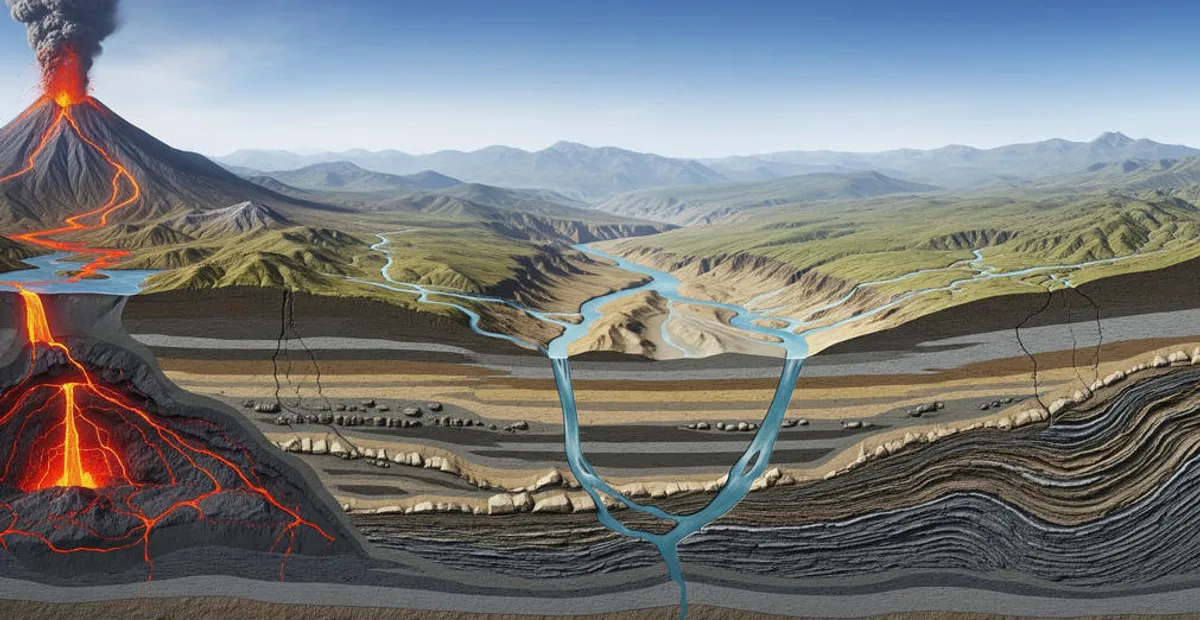
The rock cycle is like Earths recycling system. Igneous rocks form from cooled magma weather into sediments that compact into sedimentary rocks. These can transform into metamorphic rocks under heat and pressure or melt back into magma. Tectonic processes like rifting and subduction drive these changes creating basins where hydrocarbons form. In the Gulf of Mexico rifting led to sedimentary basins where sandstones and shales serve as reservoirs and source rocks critical for oil production.
Applying the Rock Cycle to Exploration
Petroleum geologists use the rock cycle to pinpoint hydrocarbon-rich rocks. Sedimentary rocks are the main target due to their porosity and organic content. Geologists study depositional environments to predict where sandstones or carbonates might form high-quality reservoirs. Igneous and metamorphic rocks are analyzed for their sealing potential or influence on basin structure. Tools like petrographic analysis reveal mineral composition while geochemical studies assess source rock quality. In the Permian Basin geologists use core samples to identify sandstone reservoirs formed in ancient marine settings.
Future Trends
Modern technology is revolutionizing how geologists study the rock cycle. Petrographic analysis with advanced microscopes pinpoints porosity in sedimentary rocks. Geochemical modeling evaluates how shales generate hydrocarbons. Machine learning processes seismic and well data to predict reservoir quality faster. These tools shine in complex basins like Vaca Muerta where shales play dual roles as source and reservoir rocks.
- Emerging tools
- Petrography for mineral and porosity analysis
- Geochemical modeling for source rock evaluation
- Machine learning for reservoir prediction
Summary
The rock cycle transforms igneous sedimentary and metamorphic rocks through cooling compaction and alteration. Sedimentary rocks dominate as reservoirs and source rocks while igneous and metamorphic rocks act as seals or basement. Tools like petrography geochemistry and machine learning help geologists target hydrocarbon-rich basins unlocking oil and gas resources.
Cuestionario
-
Which rock type is most critical for hydrocarbon reservoirs?
a) Igneous
b) Sedimentary
c) Metamorphic
Correct Answer b) Sedimentary -
What is a common role of metamorphic rocks in petroleum systems?
a) Source rocks
b) Seals or basement
c) Primary reservoirs
Correct Answer b) Seals or basement -
How does the rock cycle support petroleum exploration?
a) Forms volcanic arcs
b) Creates sedimentary basins and reservoirs
c) Generates high-pressure faults
Correct Answer b) Creates sedimentary basins and reservoirs
Bibliography
Sources Used
- Selley R C & Sonnenberg S A (2014) Elements of Petroleum Geology (3rd ed) Academic Press
Explains the rock cycle and its role in petroleum systems - USGS (2020) Geologic Framework of Sedimentary Basins Available at https://www.usgs.gov/energy-and-minerals/energy-resources-program
Details rock types and their geological significance - AAPG Memoir 60 (1994) The Petroleum System From Source to Trap American Association of Petroleum Geologists
Connects rock cycle processes to hydrocarbon formation
Recommended Reading
- Hyne N J (2012) Nontechnical Guide to Petroleum Geology Exploration Drilling & Production PennWell Books
Accessible overview of rock types and petroleum geology Available at https://www.pennwellbooks.com/nontechnical-guide-to-petroleum-geology-exploration-drilling-production/ - Boggs S (2011) Principles of Sedimentology and Stratigraphy Pearson
In-depth analysis of sedimentary rock formation
Direct Links
- AAPG Educational Resources Webinars and articles on rock cycle and petroleum geology
- USGS Energy Resources Program Information on sedimentary rocks and basins
- SPE Technical Resources Insights on rock properties in oil and gas exploration